Sometime in late 2015, my grandson Jacob and his wife Rebecca announced that they were expecting their first baby, a girl. They had selected a name but were keeping it secret. They had plans to have her name on her bedroom wall in large letters. I was given one of those letters to decorate – a “T.”
I began referring to the forthcoming baby as “Tabitha.” Several weeks before the baby was born, in the middle of the night I suddenly sat up in bed and uttered the word “Natalie.” The next morning I texted this event to Jake. His response: “What about Tabitha?”
On June 14, 2016, my grandson telephoned me to tell me that my great granddaughter had been born. He said, “You were right, Grandma; her name is Natalie.” Jacob’s wife Rebecca announced to family and friends that Great Grandma Lois had figured out the name. I explained that I hadn’t figured out anything. It came to me. This was a case of ESP – Jacob had obviously shot thought waves all the way from Texas to California.
Over five years later, in October 2021, Jacob and Rebecca announced that they were expecting their second baby, another girl. Again, they didn’t reveal the name that they had selected. Again, they planned to put their little girl’s name on her bedroom wall, and again, I was given the letter “T” to decorate; Grandma Mish and Grandpa Bobba were given the letter “E.”
Knowing that Michelle, her daughter, a friend, and I play Wordle each day, Bob suggested that we play Wordle to determine the baby’s name, so I created an informal Wordle game. As with the New York Times Wordle, the name was limited to five letters. I chose the name “Katey.” Michelle, Sara, and Chris would each give me a guess privately and I’d let each of them know when they had correct letters and when the letters were in the right place. Their guesses were Emily, Kerry, Kacey, Natey, Janey, Sadie, Mabel, Haley, Tilly, Stacy, Kaley, and Kathy. I was sure that the name hadn’t been guessed – in fact, chances were pretty good that the name selected for the baby wasn’t five letters – but I sent all of the names that were guessed to Jacob, telling him that his Dad had suggested a Wordle game and these were the results.
I continued to think of names, but didn’t really pursue the subject.
On the day the baby arrived, April 14, 2022, Jacob sent us a very sophisticated Wordle game that he had created, which would reveal the new baby girl’s name. According to the game, the name consisted of six letters, and I knew it contained a T and an E. When I looked at the Wordle, the first name that came to mind was “Violet,” a name I hadn’t even considered before. Michelle and I both excitedly began our puzzles. After I entered “Violet,” all six letters turned green. I GOT THE NAME ON THE VERY FIRST TRY! When I told Michelle of my good luck, she was so eager to know the name that she didn’t even finish the puzzle but came running over to view it on my phone.
What could have caused me to select this name? It’s clearly another case of ESP. Jacob had again shot thought waves, this time from Texas to Oregon. Obviously, my grandson and I have an extra-sensory connection. There’s no other explanation.
On Monday, March 7, 2022, I left my Zoom Writers’ Group meeting and got into the car to be driven to my cardiologist appointment. In October, because of a heart irregularity, I was having breathing problems, so my daughter Michelle called 911. After the EMT found I was in atrial fibrillation and my heartbeat was 160, I was off to the hospital. There, a heart echo revealed that I had an ejection fraction of 10-15%. I didn’t know anything about ejection fractions, but was told by the hospital cardiologist that he had never heard of a conscious person having an ejection fraction that low, the normal range being 50-75%.
After receiving excellent care, including cardioversion to get me out of atrial fibrillation, I breathed better and we were sure that my ejection fraction had vastly improved. Four months after my first heart echo, cardiologist Dr. Virgilio ordered a second echo, which was performed. An appointment was made to go over the results, and that was the reason for the March 7th visit.
Dr. Virgilio discussed the results of the latest echo, which showed an ejection fraction of 45%, close to normal. After asking me a series of questions, she was pleased that I was feeling good and back to normal activities and routines. After listening to my heart and noting a heart rate of 40 beats per minute, she ordered an EKG (electrocardiogram) which revealed a sinus arrest with a slow ventricular rhythm. Dr. Virgilio was very concerned and said I needed to go to the hospital at once to get a pacemaker. She explained that I was suffering from heart block, and because my natural pacemaker had stopped doing its job, I needed a new one. After checking, she advised us that the cardiologist who performs pacemaker implantations was on vacation, so I would need to go to a hospital near Eugene, an hour and fifteen minutes away, for the procedure. She arranged for me to be under the care of a cardiologist at that hospital. Then she added that because I take Eliquis, a blood thinner, I’d need to wait 48 hours before the operation. Stating that my situation was precarious, Dr. Virgilio insisted that I couldn’t spend those two days at home, but needed to be in the hospital where I could be closely monitored.
Michelle drove me to the PeaceHealth Sacred Heart Medical Center in Springfield. We arrived there around 6:45 PM. I was admitted into the E.R., awaiting a hospital room. I was put on a monitor that revealed that my heart rate averaged 35 beats per minute, a far cry from the 160 beats per minute that I had experienced when I went to the hospital in October (the normal range is 60-100). In addition to the heart monitor, I had a 12-lead EKG, got a chest X-ray, and blood was drawn for testing. External pacemaker pads were placed on my chest and back to be used in case temporary pacing was urgently needed. At two minutes after midnight on Tuesday, March 8th, I was moved from the E.R. to a hospital room.
When I awoke at 3:00 AM Tuesday after a short sleep, I was hungry, having had only a light dinner before coming to the hospital. When I requested food, I was advised that doctor’s orders called for fasting, which made no sense when the surgery wouldn’t be until the following day.
Later in the morning the cardiologist who was to implant the pacemaker, Dr. Karenem, came into my room and advised me that he would perform the surgery on this day. When I inquired about the 48-hour wait because of the blood thinner, he told me that the danger of bleeding was less than the danger of waiting. Then Dr. Karenem explained exactly what would be done, in terms I could understand. Before our discussion began, I called my daughter, Michelle, and put her on speakerphone so that she could be a part of the conversation and, based on her knowledge as a former Cardiac Intensive Care nurse, could explain anything that wasn’t clear to me. I was also shown a pacemaker so that I’d know what I would be wearing (what alien being would be inhabiting my body).
For the surgery, I was given a sedative and a local anesthetic, so I was awake but groggy. I marvel at what a wonderful invention the pacemaker is and the amount of skill it must take to be able to string wires through veins to the atrial and ventricular chambers of the heart. The surgery took a little over an hour.
After the post-procedure chest x-ray, I was delighted to learn that I could go home – the same day as my surgery! I didn’t need any time to decide. Funny thing, after I was admitted, I was asked to sign a form stating that I had been told I could decline leaving when a doctor cleared me to go home. This was a new Medicare requirement. I was incredulous to think that anyone would want to stay in the hospital when allowed to go home. In thinking about it now, I remember cases when patients were released and reluctantly left before they were ready and became dangerously ill.
On the way home, Michelle asked if I wanted to stop to see my granddaughter’s new home in Springfield. I was tired but didn’t want to miss this opportunity and, after all, I could do lots of resting when I got home, which is exactly what I did.
Shortly after returning home, I experienced a side effect from the agent that was used to cleanse the area prior to surgery. I developed a rash and the area itched, keeping me awake several nights. So it appears that there is yet another substance that I have difficulty tolerating.
On Wednesday, the day following my surgery, I accompanied Michelle when she was walking Banjo. After going just a short distance, Michelle noticed that I was shuffling instead of picking up my feet, so she suggested that it was time to turn around and go back home. We did this and, although it was a really short walk, I was exhausted. I grumbled a bit because of my incapacity to walk farther, and was reminded that I was expecting too much too soon. Two days later, I was capable of walking farther without getting winded.
Now that I’m healed, I have more stamina and my life is back to normal. It’s strange that the two times in the last six months when I’ve been in danger because of my heart, I felt generally good and had to be told that my situation was precarious by medical professionals, who then proceeded to get me out of those precarious situations. God bless medical professionals!
My first memory of school is kindergarten. I adored my teacher. Her name was French, Diapere (pronounced Die-a-peer’). My father would tease me by calling her Miss Diaper. I would object, of course, because I didn’t like anyone disparaging my teacher; in my eyes, she was the smartest person in the world. Many years later when I taught kindergarten, I learned that most kindergarten children feel that way.
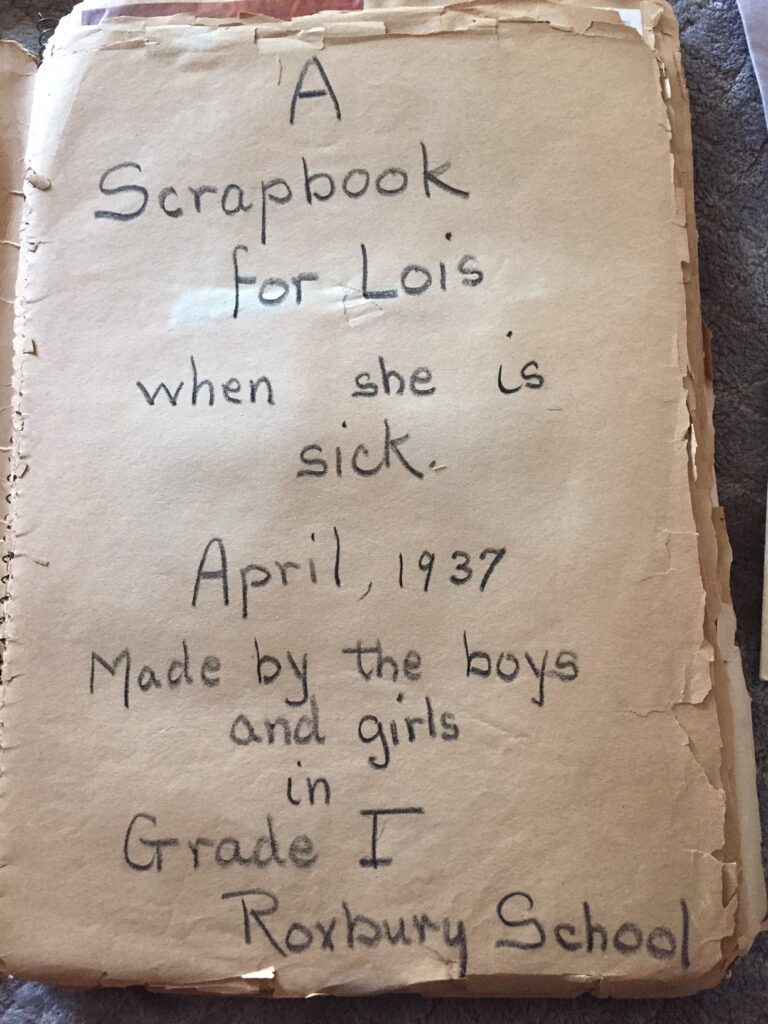
I was fortunate to be taught first grade by Miss Bowman, who had already been in that position at Roxbury School for many years. Teaching was Miss Bowman’s life. During my first grade year, I contracted Scarlet Fever and missed months of school, during which time Miss Bowman had the children cut pictures from magazines and bring photos from home in order to make a scrapbook for me. She would print something clever under each picture or photo.
I still have the scrapbook, which I treasure.
We moved from Roxbury to Moxham, a different section of Johnstown, Pennsylvania, right before my third grade year at Cypress Avenue School. One day after school when I was in fourth grade, I decided to play with my ball before going home, because one of the walls on the outside of the schoolhouse was perfect for bouncing the ball. I liked to play a game in which I’d throw the ball against the wall and let it bounce on the ground a certain number of times while I’d perform various activities such as clapping hands or turning around, going from number one to number ten. On this particular day, I was in the midst of this game when I made a wild throw and the ball hit a window and broke it. I began to cry, and a boy who was nearby said, “Ooooo, you’re in trouble! The principal is going to use his spanking machine on you!” Just then, fifth-grade teacher Miss Geiger came out of the school with my ball in her hand. She ran over to me, put her arms around me and told me that everything was fine and that she knew it was an accident. I asked her about the spanking machine, and she assured me that there was no such thing. Then she handed my ball to me and told me to go home and forget all about the accident.
The following year, Miss Geiger was one of my teachers. We changed classes in fifth grade, with Miss Geiger teaching some of the subjects and Miss Burns teaching the others. As nice as Miss Geiger was, that’s how mean Miss Burns was. We were fortunate in having a gymnasium in our school, so we were able to play games, even in winter or rainy weather. One day, we were having a relay race in the gym, when I had my finger in my mouth. Miss Burns stopped the game to tell me to take my finger out of my mouth. A little later I just had to take care of that hangnail, whereupon Miss Burns said, “That does it! Your parents need to know that you bite your nails.” On another occasion, when our class marched into Miss Burns’ room, I had a big wad of bubble gum in my mouth. I didn’t want to throw this fresh gum away, so I put it on a piece of paper and slipped it into the desk at which I was sitting, planning to retrieve it before returning to my homeroom. After changing classes, I suddenly remembered my bubblegum. I ran back to Miss Burns’ room, just in time to see Ray McGraw handing the piece of paper with my bubblegum to Miss Burns. She said, “Your parents need to know about this!” Sure enough, when I received my report card, in the deportment section, even though there was no area for remarks, Miss Burns had written in pencil. “Bites fingernails – Chews gum.” I wondered why she used pencil, when the grades were written in ink. I really think she was hoping I’d erase the penciled remarks so that she could use the opportunity to shame me again. Funny thing, though, my parents didn’t make a big deal about the comment. In fact, they laughed about it.
On another occasion, we were having a geography test for which I’d failed to study. Our Dad had taken my sister and me to a movie the night before. When he had asked if we had homework, I’d said I didn’t, so we went to a movie, leaving me no time to study; therefore, I was ill prepared for the test. We’d been given explicit notes, so studying for these geography tests was easy – we just needed to memorize the notes. I was sitting at my desk drawing a blank, when a boy in the class went up to the teacher who, fortunately, was the nice one, Miss Geiger, and said he didn’t feel well so could he take the test later? Miss Geiger said he could come in before school the next day to take the test. I went up to her desk and told Miss Geiger that I, too, didn’t feel well, so she said I could take the test the next morning also. That evening I memorized all my notes and was well prepared to take the test. I went to school early, but when I got there, I couldn’t conjure up the nerve to go into the school. To this day, I don’t know why I couldn’t go in, unless I feared someone would ask me why I went in early, or perhaps I was afraid I’d run into Miss Burns. As a result, I got a D in Geography on my next report card – the only D I ever received.
Cypress Avenue School had only grades K through 5, so we had to go to Village Street School for sixth grade. This school was some distance from our home, but not too far for us to walk. My mother didn’t like packing lunches, so she gave us money to buy lunch. My sister was in junior high school, where there was a cafeteria, but there was no cafeteria at Village Street School. As I think about it now, I don’t know why I didn’t pack my own lunch – probably because I pretty much did what my mother suggested. So each day I walked to the Dairy Dell and bought lunch. After several days of this, Mr. Miller, the school principal, who also ate there, saw me and suggested that we eat together, and he even drove me to and from the restaurant. My family had never gone to a restaurant, so I knew nothing about tipping. One day I noticed some change on the table as we were leaving and pointed out to Mr. Miller that he’d left some money. He said, “Let’s just leave it there.” One day he asked me if any of the kids teased me about eating with the principal. I responded that I didn’t think any of them knew. I really didn’t have any close friends at this new school. In addition to being principal, Mr. Miller taught sixth grade math. There were two boys in my math class who hadn’t learned the basics they should have learned in lower grades. Mr. Miller was determined to catch them up, spending our class time on remedial math for these two boys. Consequently, the rest of the class never learned our sixth grade math, so we went to junior high school knowing nothing about decimals or pre-algebra.
Cochran Junior High School consisted of grades 7 through 10. My 7th grade math teacher, Miss Brown, was extremely overweight, had a manly voice, never left her desk, and was kind and an excellent teacher. She began each math period with a quick written quiz, with each student running to the front of the room and lining up when finished. We each kept a personal graph showing our accuracy and speed in these quizzes. The first few weeks of her class, she quizzed us on the things we should have learned in sixth grade. I’ve always been good at math, but did poorly in these quizzes, when the questions were about sixth grade basics, which we hadn’t learned. As a result, I received a C in math on my report card. It didn’t take long for me to change that C to an A. Also, the accuracy markings on my graph had a sharp incline, although I didn’t do too well on speed.
One of the first things I learned in junior high school was that I loved physical education class. We were required to buy gym suits that were one-piece blue shorts overall-type outfits. There was a pocket on the front left side of the top, and we were required to have our names in yellow on the right side. Embroidery was preferred, and Millie, a distant relative who lived with my grandparents and was like another grandma to me, did beautiful embroidery, so I asked her to perform this task for me. She suggested that my mother, whose penmanship was spectacular, should write the name for her to embroider. My mother wrote my name with a special flair, which Millie caused to be even more beautiful with her meticulous needlework. Whether it was true or not, I believed I was the envy of every girl in my gym class. But the uniform wasn’t the only thing I loved about this new phenomenon – physical education! This class was responsible for my favorite ninety minutes of the week. We had PE class twice a week, which was two times a week too often for most of my friends, but not nearly often enough for me. I didn’t even mind the compulsory showers at the end of each PE class, even though this gave me a chance to compare and see how far behind I was in the area of physical development; and I wasn’t embarrassed when we lined up according to size and I was the very last one in line. I did well in every activity in PE, and I excelled in tumbling, which was a rather tame introduction to gymnastics. Much of the tumbling was done on mats. One event involved a student crouching at the end of the mat, with arms and legs tucked in, with the other students jumping over the crouching student, tucking their bodies, and ending with somersaults. Then another student would crouch beside the first croucher, then another, and another, etc. Each time, all the other members of the class would run, jump over all the crouching students, tuck their bodies, and end with somersaults. We had a tumbling assembly, in which I was the champion tumbler, clearing ten crouching students, after all the other tumblers had dropped out, one by one, as the number of crouching students increased.
At the insistence of my mother, I enrolled in the Commercial Course, rather than College Prep. At this point of my life, I’d been forced to give up any idea of college or becoming a physical education teacher. I actually enjoyed the Commercial Course, though, and excelled at Typing, Shorthand, Bookkeeping, and Business English. I received awards for fast and accurate typing and shorthand. I would practice shorthand for hours every evening, loving every moment. In my senior year, my shorthand teacher was so impressed with my characters that she’d ask me to write examples on the blackboard. I’m still quite proficient at shorthand and find it helpful when taking notes and creating stories and poems. At the beginning of my tenth grade year, the boys who had no college plans and were enrolled in the Commercial/Technical Course decided to stage a sort of rebellion. They were tired of being represented each year in student council by College Prep students, so they selected one of their own to run for student council president – a very nice looking, soft-spoken, intelligent young man by the name of Don Irons – who won the election. Don was a buddy of mine, he and I being a part of the group of kids who played softball almost every evening at a local playground. Neither of us had a steady at that time, so he asked me to accompany him to the tenth grade prom. The student council president and his date had the responsibility of leading the grand march at this prom, which was quite an honor. I was thrilled!
I spent my junior year at Johnstown High School, with the friends with whom I’d spent four years of junior high. I belonged to the Leaders’ Club, a group of girls who loved physical education, and I’d been assured by the PE teacher that I’d be a cheerleader the next year when I’d be a senior. Then my family moved to a different part of town, and I decided to spend my last year of school there instead of finishing at Johnstown High. I later regretted this decision, when I decided it had been a mistake not to spend my last year of high school with my long-time friends. I did have a good year at Westmont-Upper Yoder High School, though. I made a few friends, and I lettered in athletics, based on a point system for individual and team sports. This was unique to this school. Girls didn’t receive sports letters at Johnstown High School. I also set a record for receiving a letter in one year, which happened because I was fortunate in being on many winning teams. Another happy event for me was that I was cast in the senior class play, which began my enjoyment of theatrical performances that would last for over 70 years.
My parents refused to finance the college education I desired, believing that they could afford college for only one of their two daughters and that my sister was the logical one to receive such an education. After I was married and had two children, at the age of 30, I began college. In four years I achieved a B.A. and earned a teaching credential. I couldn’t have done it without my husband’s support. He believed in me, even though my parents hadn’t.
We didn’t recognize the signs. I was cutting down the length
of my daily walks because I’d get winded; and while on vacation, the short walk
across the sand, using walking sticks, did me in. And when my legs swelled, despite my low-salt
diet, I asked my nurse daughter, Michelle, if my heart could be the cause. She
said it could.
We returned home from our Texas vacation on October 16th. That night I had difficulty going to sleep
because I was short of breath. I
considered waking Michelle, but decided to power through. The next night I again had breathing difficulties. This time I panicked, so I woke
Michelle. She asked if I wanted her to
call 911. That seemed to be a bit
extreme for such a minor problem, but when I became more frightened, I said she
should call.
When the paramedics arrived, they put me on a heart monitor,
revealing that I was in atrial fibrillation with a heart rate of 160. Atrial
fibrillation was a new heart rhythm for me, and Michelle breathed a sigh of relief,
knowing that they could easily get my heart rate under control, relieving the
cause of my distress. As soon as I got
into the ambulance, was given oxygen,
and a sedative and heart rate medication were administered via IV, I began to
feel better. I was admitted to the hospital.
The next day, I was seen by a visiting cardiologist, Dr.
Rowe, who lives in Utah. I feel so
fortunate to have been under his care.
He started me on Eliquis, a blood thinner that doesn’t have all the
requirements associated with Warfarin; and a great drug for ventricular arrhythmias,
Amiodarone. Dr. Rowe performed an
angiogram and inserted a stent close to one that I had received about fifteen
years ago. Instead of going through the groin, Dr.Rowe went through my wrist.
A cardiac echo revealed that I had an ejection fraction of
10-15%. I was told by my cardiologist
that 50-70% is normal; 30% is dangerous; and 10-15% is extremely unusual in a
conscious person.
After a week, I was released from the hospital. It was great to be home until it was time for
bed. I had difficulty getting to sleep because my breathing was labored –
nothing like it had been before I went to the hospital, but it was scary for
me. My daughter Jeannette was visiting
from California, and she volunteered to sleep with me if that would relax me,
and this was a great help. I hadn’t had this problem in the hospital because I
was on oxygen. When I saw my GP, Dr. Meyers,
he prescribed Trazodone for sleep. He
said that I should take melatonin until my prescription was filled. I found that melatonin works for me, and not
wanting to begin another medication with possible side effects, I never took
the Trazodone. I continue to take a
melatonin each night.
Being relatively new to Oregon, I needed to find a local
cardiologist. Dr. Virgilio was highly
recommended, and she was available. I’m
very pleased with Dr.Virgilio. She
explains everything in great detail, sometimes making drawings. She emphasized the need to never miss taking my Eliquis, and she
explained the value of the anti-dysrythmic drug I’ve been taking,
Amiodarone.
On November 17, Dr. Virgilio performed cardioversion, an
outpatiet procedure to stop the atrial fibrillation I’d been experiencing since
my first symptoms. The procedure was successful, but I had a bad side effect
from the Propofol, an anesthetic I’d had previously without incident. While lying in recovery, I began having a
feeling of pin pricks on my arms and legs, followed by a feeling of burning on
my skin, followed by extreme pain all over my body, some of the worst pain I’ve
ever endured. I couldn’t stand to be
touched, and when the nurse removed the electrodes that had been stuck to my
chest, I felt as though she was tearing out pieces of flesh. Fortunately, the symptoms gradually subsided
and were gone in an hour or two.
During a conversation with the anesthesiologist when we had time to kill prior to the cardioversion, I mentioned that my sister was a doctor. He asked if she was living, and was incredulous that someone my age had a living older sister. He said we obviously have good genes. I told him that our parents died at 47 and 52 – but I added that they both smoked. Then the anesthesiologist asked what kind of doctor my sister was. I responded, “She’s an anesthesiologist.”
As I write this, I’m feeling good. I’m back to exercising and taking daily
walks. I get stronger every day.
I’ve been fortunate in receiving good medical care throughout this ordeal. Even though I would rather have been at home, my hospital stay was pleasant. Also, I received nice ego boosts when several doctors and nurses told me that they had told hospital staff members who were coming to see me to not turn around and leave – “You’re in the right room. She really is 91.”
“When the cat’s away, the mice will play.” Bob and I had an opportunity to check out
this maxim, as Michelle – the sheriff, the mayor, the boss, the superintendent,
or, in this instance, the cat – went to Yosemite National Park with friends for
a week, and we were on our own. Michelle
and Bob are my daughter and son-in-law, and I live with them.
When Michelle is in charge of our food, it is delicious,
but, more important, it’s nutritious.
You don’t see very much junk food in our house – until now.
The first evening, Bob said he likes to support local
businesses, so it seemed fitting that we have pizza. In truth, we sometimes indulge in pizza when
Michelle is home. The two pizzas
provided one dinner and two lunches.
Bob, no stranger to the kitchen, prepared dinner the next two evenings.
The following day was my turn in the kitchen. I baked cookies, and for dinner I prepared
meatloaf and twice-baked potatoes. Bob
steamed vegetables to complete the meal.
The meatloaf and potatoes provided two dinners and two lunches.
Foodwise, we weren’t being terribly naughty, but that was
about to change. Our traditional Sunday
brunch is usually omelets, salmon patties, turkey bacon, oven-fried potatoes, and
the like. This Sunday I suggested that
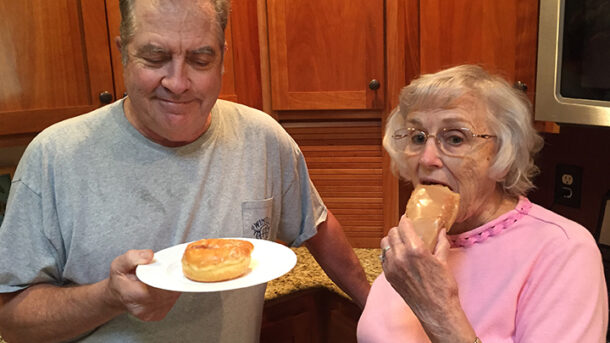
brunch consist of donuts. Bob was quick
to agree and bought a half dozen assorted donuts plus some donut holes, which
we managed to polish off in one day. A
few days later, Bob produced a recipe he wanted to try: Watergate Salad, which is a misnomer. It should be called Watergate Dessert. The Watergate name is appropriate, though, as
this dessert is criminal, the main ingredients being Cool Whip and pistachio
instant pudding. Bob didn’t agree that
this wasn’t a healthful dish, pointing out that we used “Lite Cool Whip” and
the dessert contained fruit: pineapple
and Mandarin oranges. We managed to
finish this treat before the boss returned.
Whether we’ll confess to her that we indulged in this sinful conglomeration
remains to be seen.
Later Bob decided to support another local business, and he
wanted to verify the new Oregon statute that allows take-out alcoholic
beverages, so he ordered from a Mexican restaurant. The marguerita was definitely to Bob’s liking,
and the food supplied our last dinner and lunch before la policia returned.
The first two days, I didn’t take my daily walk. Bob walks often, but I hadn’t realized that
all I had to do was suggest we walk, and he and Banjo happily obliged. So on the plus side, while Michelle was gone,
I walked every day except two.
My grandson, Jacob, recommended a movie he thought we would
enjoy: Mitchells vs the Machines. I
shouldn’t have been surprised that a movie recommended by the father of a four-year-old
would be animated. Although I’m not
crazy about animation, and am definitely not a sci-fy enthusiast, I agreed that
we should follow through on Jake’s suggestion.
I rather enjoyed the film. It had
many funny moments.
In the past I have watched Dancing with the Stars, which is where I became acquainted with Nev
Schulman, who hosts a TV show called Catfish. I was aware that this show certainly isn’t
for everyone, so I decided the best time to binge-watch it would be in
Michelle’s absence, so that’s what I did.
Bob, being a normal human being, wasn’t a fan; however, he’d be in the
living room from time to time during my watching marathon and would see bits
and pieces, which led to some discussions between the two of us about the
stupidity of people falling for these cons and the unconscionable actions of
those implementing the cons. These
aren’t the scams performed by people in India, who fleece victims to the tune
of hundreds of thousands of dollars.
Money seldom changes hands in this TV show, the main things stolen being
affection and time. As with all
so-called “reality” shows, this one is obviously scripted, which is a good
thing because that makes the show move along.
I haven’t quite finished the season of Catfish, so Michelle will need to indulge me.
To say that Bob, Banjo, and I missed Michelle would be an
understatement. We missed her like
crazy. At the same time, we were happy
that she got to spend time with her good friends who worked with her in
Arizona, and whom she hadn’t seen for over a year. And we knew that we could text Michelle any
time we had questions – she was just a click away. We did take advantage of that option – maybe
too often, but Michelle didn’t seem to mind.
She also kept photos of beautiful Yosemite coming to us regularly.
Bob wasn’t home when Michelle walked in the door on her
return. I got a big hug and then said,
“I wonder if Banjo remembers you.”
Stupid question – Banjo ran in circles, bumping into Michelle again and
again, while whimpering his message: “I
missed you soooo much. Don’t leave me
again.” I feel the same way, Banjo.
All in all, Bob and I did a pretty fine job of fending for ourselves. We didn’t starve (actually, we each may have gained a few pounds); we’re still good friends; and neither of us got injured. This was a great experience for us. We had an adventurous week, which I think can be summed up in one word: donuts.
Her name was Lois, the same as mine, and, when we were teenagers,
she was one of my best friends. So when
my husband and I attended a class reunion in Johnstown, Pennsylvania, we got
together with Lois and Jim, her husband.
Jim was in the class ahead of us, and I had known of him but he hadn’t
known me. Every time my husband and I
attended a reunion, we spent time with Lois and Jim, and we exchanged Christmas
cards every year. After Lois died a
number of years ago, the Christmas card exchange continued. Then, almost two years after my husband’s
passing, Jim wrote a note on his Christmas card and included his email
address. This was how our email
relationship began.
I realized at the outset that I was in for a treat, knowing
that Jim had been a newspaper writer and still occasionally wrote columns for
the local newspaper, and he certainly doesn’t disappoint. His messages are full of reminiscent stories
about our younger days, philosophical musings, testimonials of his faith, anecdotes
and opinions. Each time I see his email
address in my inbox, I get a twinge of excitement, wondering what he’ll regale
me with next. I love reading his
communications; likewise, he seems to enjoy what I write and doesn’t hesitate
to tell me so.
A childhood friend invited me to visit her in West Virginia
this past September and October, promising to drive to our hometown of
Johnstown, where we could meet with Jim and another friend. The four of us met for lunch, and it was so
nice having a face-to-face conversation with Jim after almost a year of email
communications. When Jim and I found
ourselves alone for a few minutes, he leaned in and gave me a kiss which, I
must admit, was welcomed. In the first
email I sent to Jim after my return home, I told him that I planned to write
about my trip East for my writers’ group and said, “I have a dilemma: do I or do I not mention the kiss?” He was very forthcoming in his answer, so I
don’t think he’ll mind if I quote him verbatim:
Dear
soft-lips: You have to mention the kiss. It undoubtedly had to have
been the shortest kiss in your illustrious kissing background with those with
more than a passing interest in your life. I would like a second
chance. I know I can do better. I
truly was taken aback with the tenderness of that brief spontaneous
exchange. Actually, on my part the “move” was not that
unplanned. I had been thinking of such an exchange and pondered briefly
discussing the possibility with you via email. I decided “no”–
— better to let nature run its course.
Right after receiving this email, I took a 2 1/2–week trip. When I returned home, I found myself very
busy and didn’t get around to emailing Jim until almost two months after I
received his last email. I apologized
profusely, assuring him that I thought of him often; nevertheless, I received
no response. Then, conformity be damned,
even though it was his turn to email me, I sent Jim an email on Christmas day. Still not having heard from him, I sent
another email on January 14th.
Okay, Jim, I get it – I made you wait almost two months for an email,
but come on, I sent you three emails.
Doesn’t that count for something?
I decided to Google Jim to find out if he’d written any columns recently
for the newspaper. There was nothing new
written by Jim, but something written about him. According to his obituary, Jim “passed away
peacefully the evening of January 6, 2016, as a consequence of heart failure,”
after “being stricken” eight weeks prior.
So he never received any of my last three emails, and he’ll never get
that second chance to “do better.”
I always say: the internet gives
us all sorts of information, some good and some bad. I’ll take the bad with the good, though,
because without the internet I would not have formed a warm friendship with
this very special man.
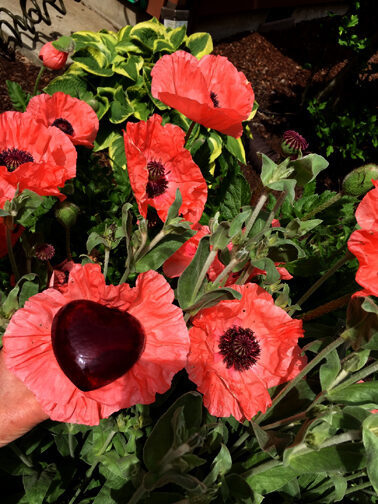
Nancy Cowardin, an artist as well as an excellent writer, is a member of Friends Memoirs Writers Group. I also belong to the group, so had the good fortune to receive a personalized rock that she painted for me, to commemorate one of the beautiful drawings by Raoul Pascual that appears in the book I wrote. She painted a personalized rock for every Group member. Nancy is a treasure, and the rock she painted just for me is my treasure.
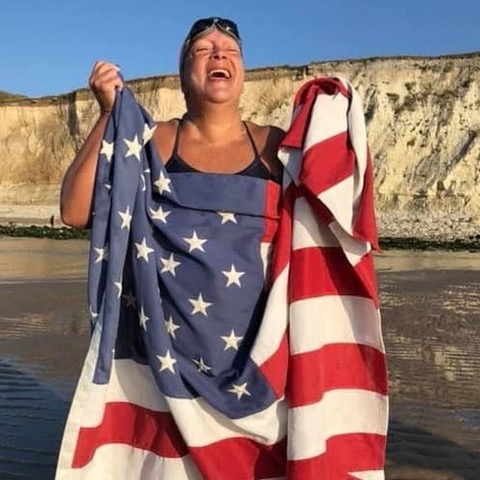
I had it marked on my calendar for several years: Diana, a friend of my daughter Jeannette and myself, would swim the English Channel in August, 2019 – and I planned to be there to see her off from the English shore and to greet her in France on the completion of her swim. It seemed only right because six years ago, I was one of her many friends and relatives to greet her on a Palos Verdes shore in California upon her completion of a swim from Catalina. Although the song says Catalina is “26 miles across the sea,” her swim was registered at 20 miles because of the point in Catalina from which she started and the point in California where she landed. This swim took her 17 hours and 9 minutes.
So, for four or five years, my daughter and I planned to be in Europe for Diana’s English Channel swim. As the time drew near, we began to study the logistics. The first problem would be traversing the Chunnel, a trip that would prove difficult because of my claustrophobia. I planned to handle this situation with massive doses of Xanax. Then we talked about my needing a wheelchair for long-distance walks, which could cause another problem. Travel agents confirmed that England and France aren’t extremely wheelchair-friendly. Add to that the indefinite timing of the swim. Diana couldn’t be guaranteed a certain day to make the English Channel swim. The date and time would be determined based on several things, including the number of swimmers attempting the channel swim this year, and the weather. Diana only knew that it would probably be some time in August, hopefully during the week she had planned.
While we pondered whether or not to make this trip, Diana came up with a solution. In addition to the Catalina swim and the English Channel swim, there is a third event that completes the distance swimmers’ triple crown. It is circumnavigating Manhattan, known as the Twenty Bridges Swim, a feat she planned to complete in July. The window for this event was much smaller than the one for the English Channel swim, and it was likely that her swim would take place within that window.
Jeannette and I decided that instead of flying to Europe in August for the channel swim, we would fly to New York in July for the Manhattan swim. I felt that was a wonderful idea, especially since New York is one of my favorite cities. So Jeannette and I flew to New York on July 14th, arriving on the 15th. Diana swam around Manhattan on July 16, 2019. We saw her off from a dock, as she entered the boat that would stay with her during her swim. The boat carried her to the spot where she would begin swimming. We spent the day doing touristy things, knowing that Diana would be swimming for hours. When we felt she was within an hour or so of finishing the swim, we went to a lovely park that was next to the dock where she would land. As we waited there, we saw another swimmer, a young man who had begun at the same time as Diana, as he finished the swim. We knew it would be a while before we’d see Diana because she admittedly is a slow swimmer. We were so excited when we saw the boat and then Diana in the distance, and we watched her finish the 28.5-mile swim in 9 hours and 34 minutes. Everyone knows that the water around Manhattan is contaminated. For that reason, in preparation for the swim, Diana was put on a regimen of antibiotics, and after the swim she rinsed her mouth with diluted hydrogen peroxide.
Obviously, a great deal of training and planning go into these long-distance swims. Also, boats and kayaks are needed for each swim. Their crews set the route, watch for obstacles, and toss bottles of liquid nourishment to the swimmer. During the Catalina swim, one of the kayak crew’s tasks was to watch for sharks. The boat crews are hired, but Diana was fortunate in having volunteer kayak crews, for the most part. The rules in order for long-distance swims to be officially recognized are very strict. No one was permitted to touch Diana once she entered the water, and when she reached the California shore on her Catalina swim, as she struggled to navigate the rocky beach, all of the spectators were told, via loud-speaker, to not go near her until the swim was declared official. She began the Manhattan swim by jumping off the boat into the water right next to a pier, and she ended by climbing into the boat at the same spot.
After her New York swim, Diana was justifiably proud, and Jeannette and I were equally proud and decided it was our responsibility to share Diana’s accomplishments with the world. All of the waiters, waitresses, hotel personnel, and cab drivers the three of us encountered were apprised of the important person in our midst, as Jeannette and I regaled them with the details and statistics of Diana’s past and future swims. Everyone was understandably impressed.
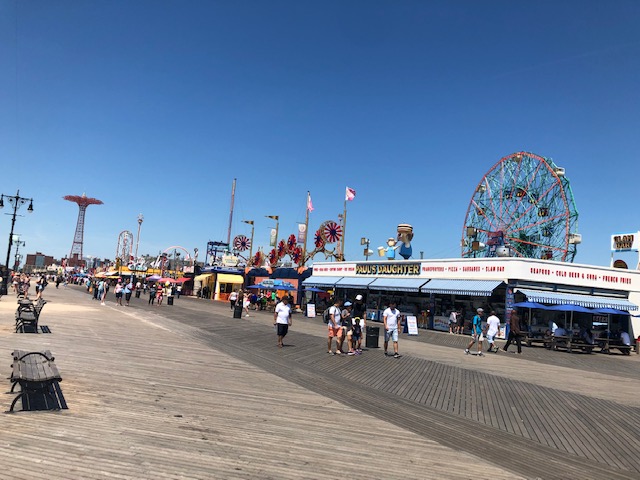
As I said, New York is one of my favorite cities. While there, we decided to see things we’d never seen before. Although I’ve been to New York City many times, I’d never been to Coney Island. Jeannette and I decided that during Diana’s swim would be a good time for us to visit this world-famous playground. While there, we saw the New York Aquarium, shared a Nathan’s hotdog, and had some of the best soft-serve I’ve ever eaten.
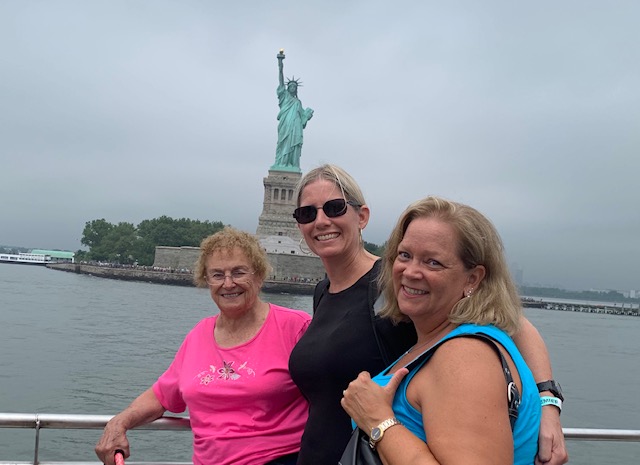
At the top of Diana’s list of things to do in New York was to take a sightseeing boat around Manhattan, over the same route she swam. Jeannette and I readily agreed. This would be new to us, although we had previously boated to Ellis Island and back. It rained off and on that day, so I looked like a drowned rat. Nevertheless, the photo of the three of us standing on the boat deck with the Statue of Liberty in the background is one of my favorites.
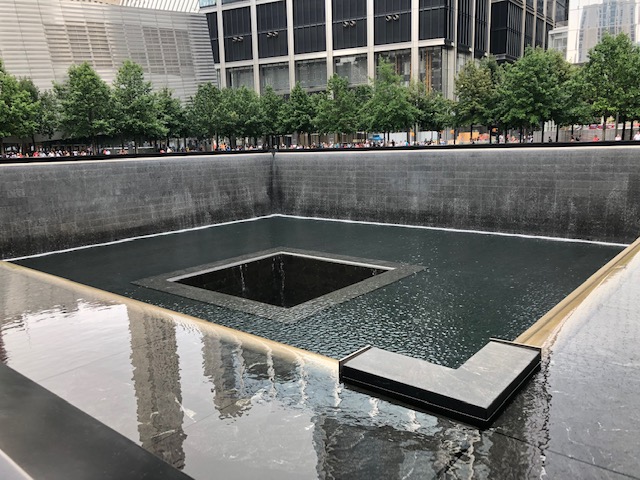
Diana, Jeannette, and I agreed that we couldn’t leave New York without visiting the 9/11 Memorial, dedicated to the almost 3,000 people who perished as a result of this infamous event. The last time Jeannette and I had visited New York was in December of 2001. At that time we saw the direct aftermath of that horrible disaster. This time, along with Diana, we visited the 16-acre site where the 9/11 Memorial sits. It was so nice to see the beautiful memorial that turned this hellish spot into a lovely park, with an impressive tower and two magnificent square reflecting pools, set within the original Twin Towers footprints, with waterfalls cascading down the sides. By the time we left the memorial, I was exhausted from all the walking. There didn’t seem to be any place in front of the memorial where a taxi could stop. We saw a small building, which housed a police officer, with a sign warning that no one was to speak to the officer, so we walked up and began a conversation. We explained that one of us was an old woman who was very tired and that we needed a cab. The officer told us that cabs aren’t supposed to stop there; however, if we could get one to stop, she said she would look the other way. Fortunately, shortly after, we were successful in hailing a cab.
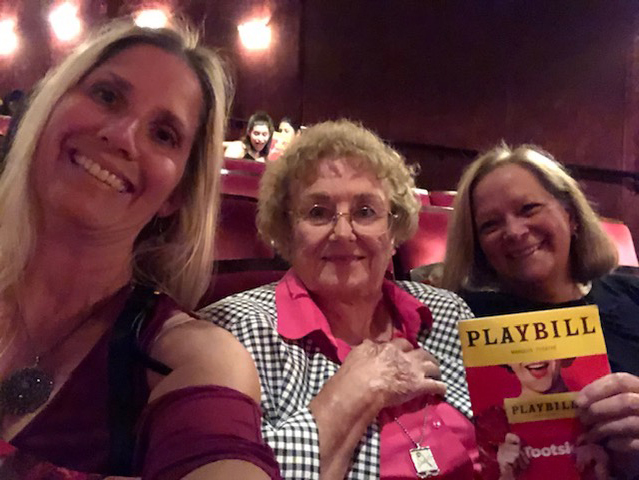
Diana and I believed that a trip to New York would be incomplete without taking in a Broadway show; Jeannette, not so much. Even though she had gone to Whittier College on a drama scholarship, at this point of her life Jeannette prefers the silver screen to live performances She likes to quote a line from the movie ” Sabrina.” In seeking favor with Sabrina, Linus, played by Harrison Ford, decides to take her to a musical, definitely not in his comfort zone. When he asks his secretary to get the tickets, she says to him, “You realize, don’t you, that the characters will periodically break into song, and dance about,” which pretty much reflects Jeannette’s attitude toward musical theater. Nevertheless, Diana and I prevailed, and a decision was made that we would see the hilarious musical “Tootsie.” Whether or not she would admit it, her reactions revealed that Jeannette really enjoyed the show. My daughter remembers just about every line of every movie she’s ever seen, so after the show, she was able to explain to us all the differences between “Tootsie” the movie and “Tootsie” the play. Later, Jeannette and I watched the movie. Although I’d enjoyed this movie many years ago, most of it was new to me. Jeannette, of course, vividly remembered every scene.
On August 3, 2019, Diana went to England to swim the English Channel. She was accompanied on her trip by another distance swimmer, her friend Carol-Lynn, who was fortunate in getting to swim the channel on August 8. We excitedly watched Carol-Lynn’s progress on a website that followed the boat that accompanied her. Due to weather conditions, Diana had to extend her stay in England an extra week to have her
opportunity to swim the channel. After being in England nearly a month, she finally began her swim on August 21st at 2:00 a.m. We followed her progress online, all 21 miles of it. After swimming 16 hours and 32 minutes, Diana touched down in France, completing the third and final event in the distance swimmers’ Triple Crown.
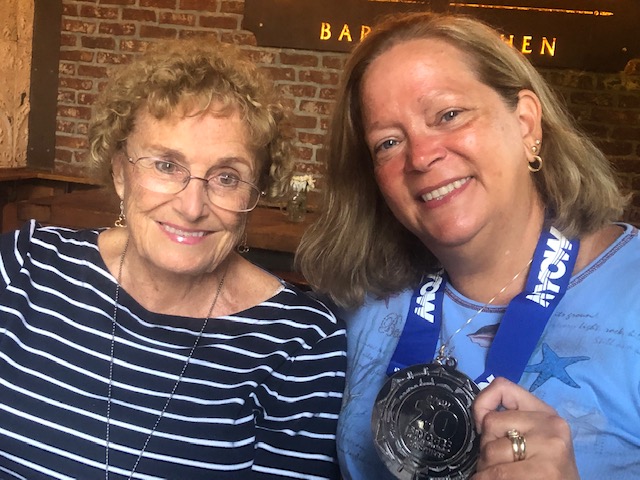
I am so proud to be able to call Diana Qualls Corbin my friend. I’ll always remember my excitement when she completed her three major swims. I feel privileged to have personally witnessed two of these – the first, on a California shore surrounded by twenty of her family members and closest friends who vicariously experienced this wonderful adventure with her; and then, just the two of us, my daughter and I, in a New York City park, watching with great anticipation to get our first glimpse of our super-hero friend swimming toward us, and then following her progress to the end of the swim. Thank you, Diana, for giving us entertainment and inspiration, and for being a role model to show what can be accomplished with determination, dedication, diligence, and drive. Thank you, too, for providing me with an excuse to visit New York.